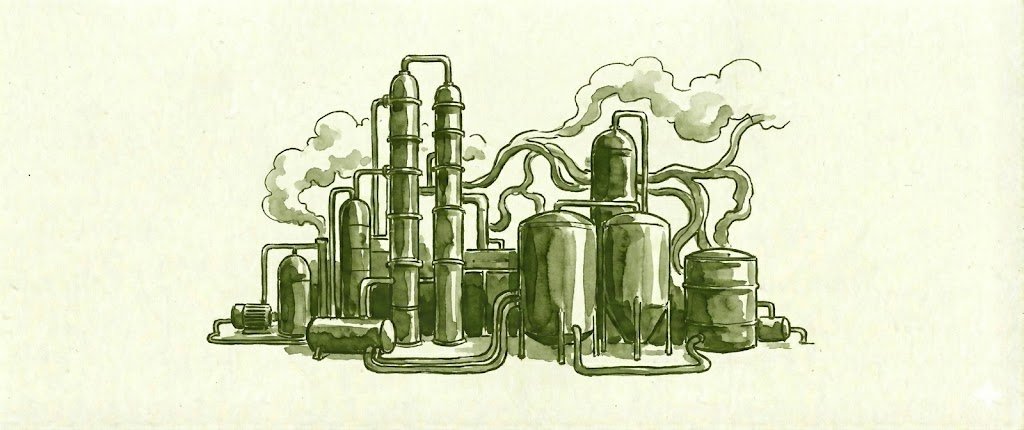
Even with decades of research and development, the sector and its production methods face stagnation in a changing world, persistently falling behind growth projections year-after-year.
Demand is not the issue: on the contrary, airlines are facing mounting legal pressure to buy SAF, but there simply isn’t enough to buy to reliably meet mandates. Producers simply cannot produce and supply enough SAF at the needed scale, and the supply side of the equation has been persistently lacking in what has become an endemic issue. This is a modern tale of an industry needing disruption.
1. Production & Supply (The Bottleneck)
The global production of SAF is estimated at 1.9 million tonnes (approx. 600 million gallons). While this represents a 2x increase in production capacity from the previous year, it’s a major downward revision from previous forecasts, and fails to meet the supply requirements stipulated under ReFuelEU, the UK SAF mandate and other regional SAF mandates.
Despite this shortfall, production growth is expected to slow substantially in the coming year, with the 2026 production forecast coming in at just 2.4 million tonnes. While the SAF industry flounders, this ongoing mismatch is forcing huge pricing inefficiencies and resulting in huge operational consequences for the airline industry.
2. Economics & Price
The "Green Premium": SAF remains 2x to 5x more expensive than conventional jet fuel.
Regional Variance: Prices are highest in regions with strict mandates (like the EU and UK) where supply is tightest, creating what the International Air Transport Association has recently called an "oligopolistic" supply chain where producers can dictate high prices, and have persistently overwhelming pricing power due to the lack of presently viable alternatives.
3. Present Technology Dominant Tech:
HEFA (Hydroprocessed Esters and Fatty Acids) made from used cooking oil (UCO) and animal fats is still the only mature technology, accounting for approximately 80% of current supply. But the industry is hitting a limit on available waste oil, as there isn't enough used cooking oil in the world to scale HEFA much further.
Some Emerging Technologies: The industry is pivoting toward Alcohol-to-Jet (AtJ) (ethanol/agricultural waste) and Power-to-Liquid (PtL) (synthetic "e-fuels" made from hydrogen and captured CO2). However, these facilities are capital-intensive and slow to build, with most significant volumes not expected until the late 2020s.
4. Policy Landscape: The Carrot and Stick Divide
Two distinct geopolitical approaches are currently playing out:
USA (Incentives): The US uses the "carrot" approach (Inflation Reduction Act tax credits). This has been more successful at driving production investment but faces uncertainty regarding long-term policy extensions (e.g., the 45Z tax credit, recently extended for a further 2 years under the Trump administration).
Europe/UK (Mandates): The EU uses the "stick" approach (ReFuelEU Aviation mandates forcing airlines to blend SAF).16 While this guarantees demand, it has led to much higher prices for European carriers compared to their US or Asian counterparts.
The Bottom Line
As of the end of 2025, the current technology is functioning but sorely lacking, and the industry is in need of severe disruptions to meet the demands of the current wave of adoption. Despite these needs, the industry is stuck in a "chicken-and-egg" cycle. Investors are hesitant to build massive refineries without guaranteed affordable feedstocks, and airlines cannot sign long-term contracts at current prices without bankrupting themselves.
Where Do We Fit?
UMeWorld is using proprietary technologies to address the structural supply shortfall via production in enzymatic hydrolysis. With a manufacturing base capable of producing functional enzymes at scale, SAF production through enzymatic pathways poses benefits across the board in lower operating expense requirements, lower capital expense requirements, feedstock flexibility (production without relying on increasingly expensive used cooking oil), greater efficiency and lower carbon intensity than incumbent SAF production pathways.
Forward-Looking Statements: Certain statements on this website are forward-looking and subject to risks and uncertainties that may cause actual results to differ materially to those projected herein. UMeWorld Inc. undertakes no obligation to update any forward-looking statements, and information provided here does not constitute an offer to sell or a solicitation to buy any securities, and should not be construed as such.


